
Services
Every project starts with understanding what's actually happening with your concrete — not just what it looks like on the surface.
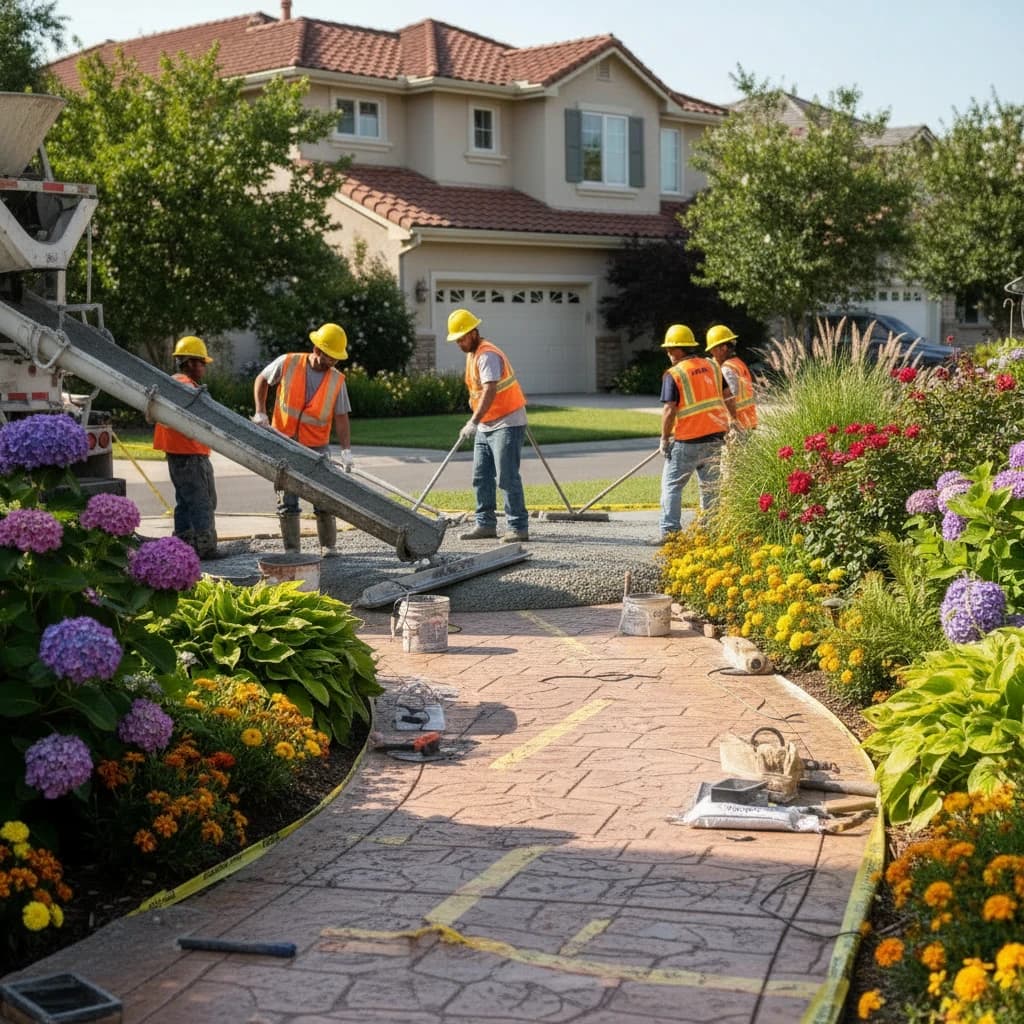
Driveway Resurfacing
A full aesthetic rejuvenation for cracked, faded, or dated driveways — not a patch job.
- ✓Bonded overlay over your existing slab
- ✓Stone-look or smooth finish options
- ✓Typically done in 1–2 days
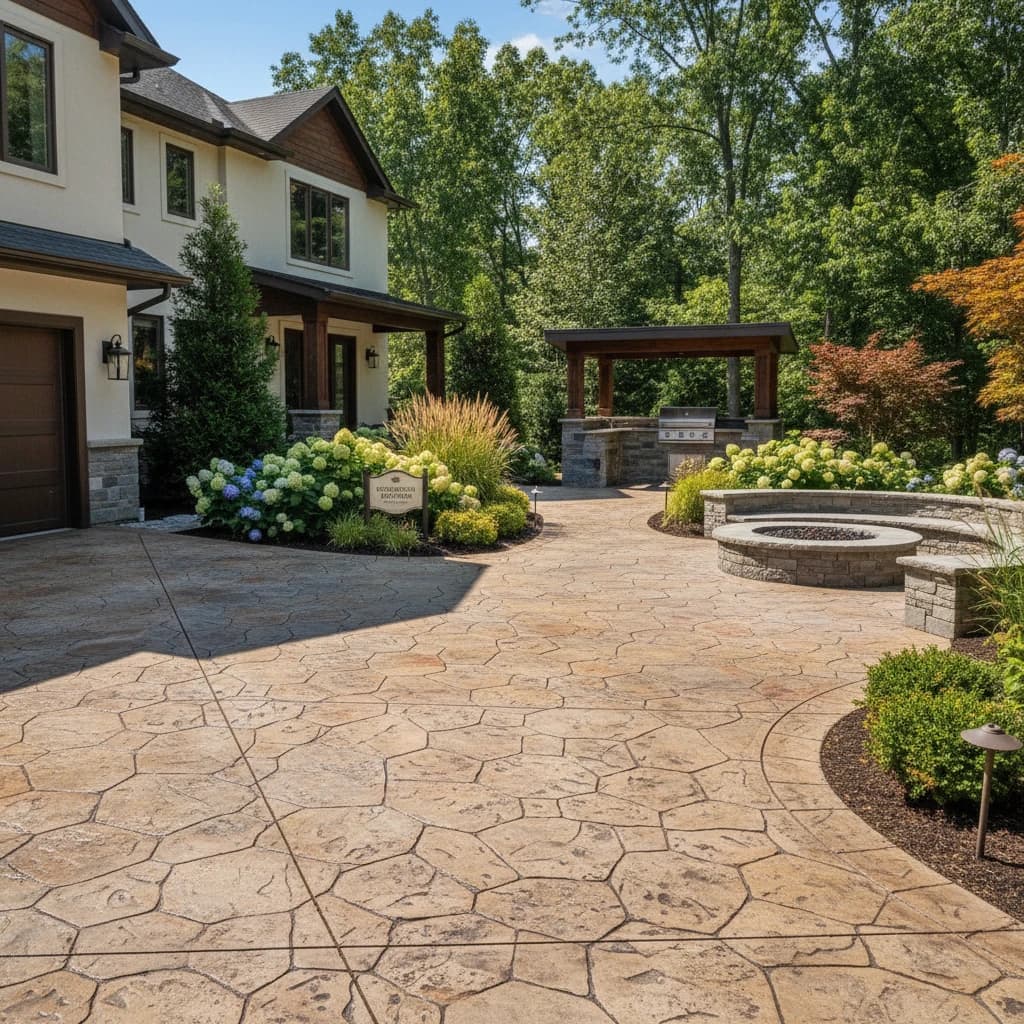
Stamped & Decorative Concrete
Natural stone-look finishes for driveways and patios, without natural stone pricing.
- ✓Natural stone, slate, or brick patterns
- ✓Integrated with your landscape design
- ✓Sealed for Charleston heat & humidity
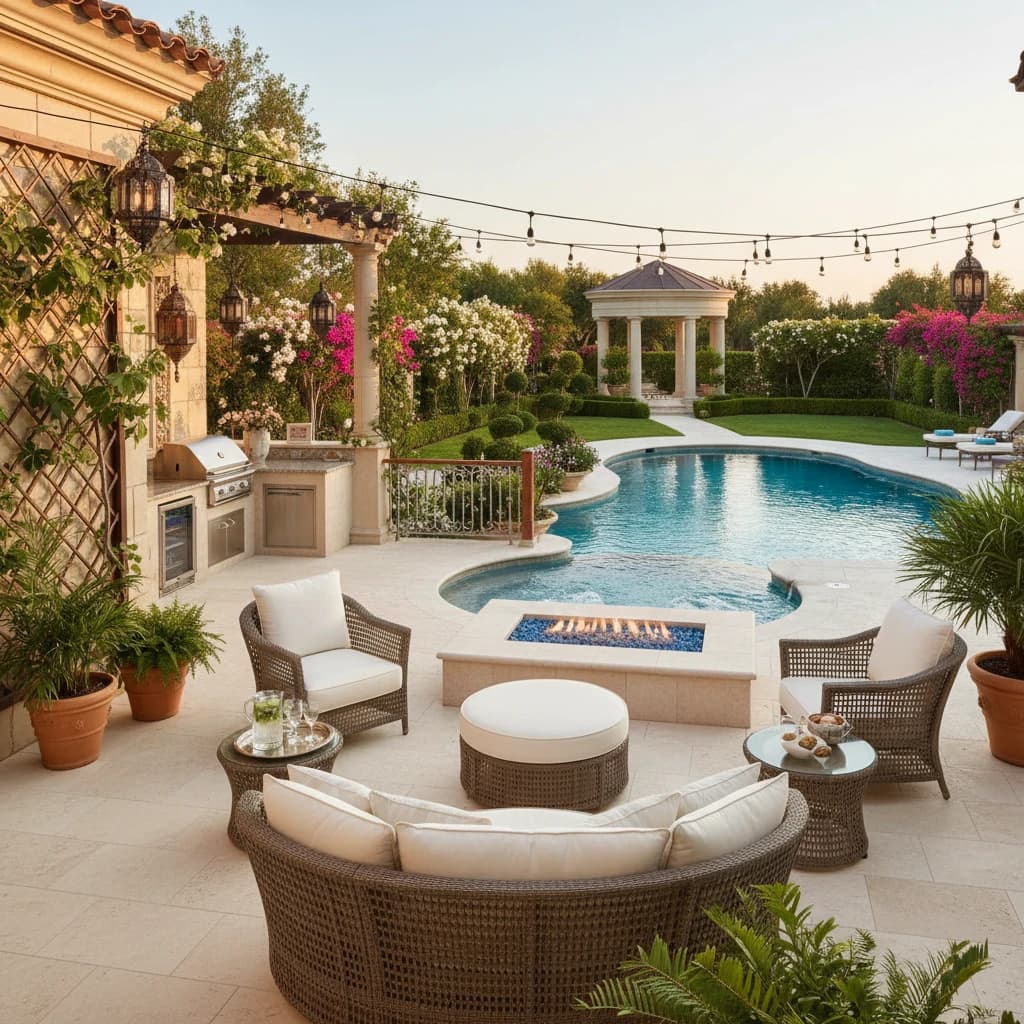
Patio Resurfacing
Resort-style outdoor living, built on the patio you already have.
- ✓Built on the patio slab you already have
- ✓Matched to how you actually use the space
- ✓Resort-style finish options
Garage Floor Coatings
Epoxy and polyaspartic garage floors specified for Charleston humidity — diamond-ground prep, not an acid-etch shortcut.
- ✓Diamond-ground prep, not acid etch
- ✓Moisture-tested before any coating
- ✓Epoxy & polyaspartic systems
Pool Deck Resurfacing
Cool-touch, slip-resistant pool decks that hold their color through Lowcountry sun and salt air.
- ✓Cool-touch, anti-slip finishes
- ✓Recoats failed cool-deck surfaces
- ✓UV-stable color for salt air & sun
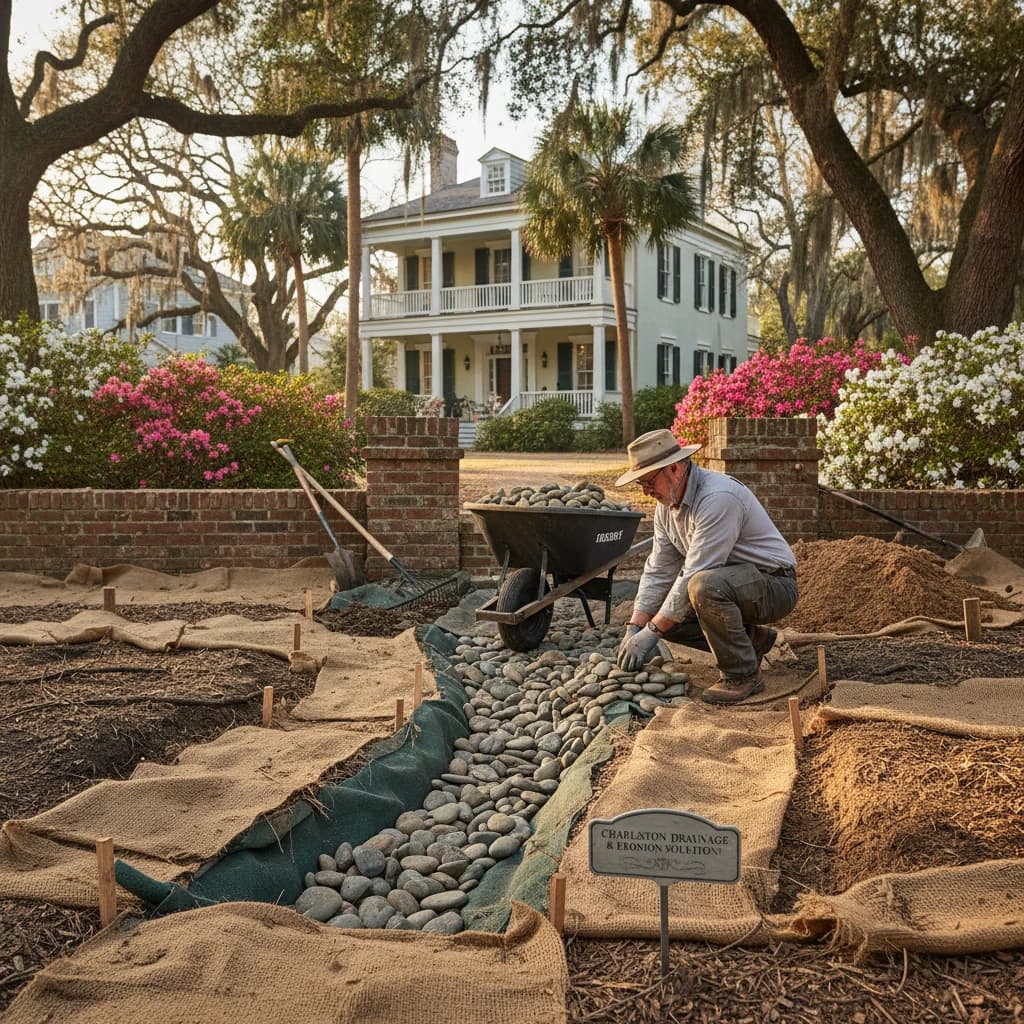
Drainage & Erosion Repair
Charleston's drainage and erosion problems, solved at the cause — not just resurfaced over.
- ✓Diagnoses the cause, not just the crack
- ✓Grading, drainage & permeable options
- ✓Addresses erosion at the source
Driveway Resurfacing
How can I tell if my driveway has settled or lost its base? (a 2-minute test)
You can get most of the way to an answer yourself, with no tools, on a dry day. First, the tap test: walk the slab and tap firmly with a hammer handle or the heel of your shoe, listening for the change from a solid ring to a hollow, drummy note. Hollow means a void — base material has washed out from under that section and the slab is partly unsupported there. Second, the rock test: stand with one foot on each side of a crack or joint and shift your weight. Any movement or rocking means the two sides are no longer resting on the same base. Third, the puddle check: after the next rain, note where water stands on the slab and where it runs off the edge, because a dip that holds water is both a symptom of settlement and the mechanism that keeps it going. Hollow spots, rocking sections, or standing water mean the conversation starts with the base and the drainage, not the surface — an overlay over any of those inherits the problem. A crisp ring everywhere, no rocking, and water leaving the slab means you are most likely looking at a surface-condition job, which is the cheaper answer.
What's the best time of year to resurface concrete in Charleston?
Fall, for most projects. Overlays and coatings want surface temperatures roughly in the 50-80F range and a dry window of about 24 hours after placement, and Charleston's October and November stretch hits that more reliably than any other part of the year — summer afternoons flash-cure material too fast and pop-up storms interrupt placement, while midwinter cold snaps slow cure and push schedules. Spring works too, with more weather risk. None of this makes other months impossible; it means the crew plans around the forecast instead of the calendar, and the fall window is simply the one where fewer jobs get rescheduled. If you are thinking about it for next season, an assessment now is worth more than a quote in March, because drainage problems are easiest to see while the ground is still wet.
Stamped & Decorative Concrete
Why do some contractors refuse to resurface stamped concrete — and when should you walk away?
Because it is the category where prep decides everything and the downside of a wrong call is a whole patio. Experienced hands in DIY and trade forums tell stamped-concrete owners the same thing we do: how well an overlay holds depends heavily on the quality of the prep work, and where the existing surface is not sound, the risk of the overlay starting to fail within a few years is high. Stamped concrete is harder to prep than a broom finish for a simple physical reason — the pattern means the profile is uneven, so grinding has to open a bonding profile across relief rather than across a flat plane, and any existing sealer or color coat has to come off completely instead of mostly. That takes longer, and it pays less than a replacement, which is why declining the whole category is an easy business decision for some contractors. The honest version is that resurfacing stamped concrete works when the existing surface is still bonded and the slab has not moved, and does not work when it is delaminating, heaving, or sitting over an active drainage problem — and either answer should come from someone who sounded the slab in front of you rather than from a phone call.
How much does a stamped concrete driveway cost?
Stamped and decorative overlays typically run $6–$20 per square foot nationally depending on pattern complexity and color work, with driveway-specific stamped overlays commonly landing around $8–$12 per square foot — a mid-size driveway (roughly 500 sq ft) often lands in the $4,000–$6,000 range. General industry context, not a quote for your specific job.
Patio Resurfacing
Do I need to tear out my old patio to resurface it?
Usually not. Most patios don't need to be torn out — if the existing slab is structurally sound, we resurface over it with a bonded overlay, which is faster and less disruptive than a full replacement.
How much does patio resurfacing cost?
Patio overlays follow similar per-square-foot pricing to driveway resurfacing — roughly $3–$7 per square foot for a standard overlay, more for stamped or decorative finishes. Your exact price depends on size and condition, confirmed after a real assessment.
Garage Floor Coatings
Is polyaspartic really stronger than epoxy, or is that a sales line?
The claim you will hear — that polyaspartic is eight to ten times stronger than epoxy — is a marketing comparison rather than a like-for-like material fact, and a coatings company called Stronghold Floors published a blog FAQ around the end of September 2026 that argues exactly that: the figure gets quoted to sell a single-layer system, and the comparison does not describe how either material behaves in a real floor build. The more useful way to think about it is that the two materials are good at different jobs. A 100 percent solids epoxy wets into the opened pores of a ground slab and builds the bond, and a polyaspartic topcoat handles abrasion, chemicals and UV far better than epoxy does. Stronghold’s own recommendation is the hybrid that follows from that — an epoxy primer, a full chip broadcast, then a polyaspartic topcoat — and their explanation of why rapid-cure one-day systems fail is that the material sets before it has penetrated the pores at all. Their framework, cited as theirs. The question it gives you for any bidder, including us: which material is doing the bonding, which one is doing the wear layer, and why.
What is the difference between hot-tire pickup and hot-tire marks?
One is a bond failure and the other is cosmetic, and they get used interchangeably in a way that costs homeowners money. Hot-tire pickup is when warm tires soften the coating’s grip on the slab and lift pieces of it off, leaving bare concrete in tire-shaped patches. That is a preparation failure almost every time — an acid-etched or inadequately ground slab that never had a mechanical bond to hold. It does not improve and it is not repairable in place; the affected area has to be ground back and rebuilt. Hot-tire marking is different: the plasticizers in tire rubber discolour or dull the topcoat without the coating leaving the floor. That is a surface-chemistry and product-selection issue, usually manageable, and on a quality topcoat usually minor. When a contractor says their system is hot-tire resistant, the question is which of the two they mean, because resistance to marking says nothing at all about resistance to lifting.
Pool Deck Resurfacing
How does a rubber overlay compare with concrete resurfacing around a pool?
They solve the slip-and-comfort problem in different ways and they are worth comparing honestly, because rubber-surfacing vendors are the loudest voice in this conversation right now. Their own published claims are the place to start: Replay Surfacing advertises roughly $9 to $16 per square foot for a poured rubber surface with a 12 to 15 year service life, against 3 to 5 years for deck paint. Those are the vendor’s figures about their own product, not independent findings, and we do not install rubber. What is fair to say is where each one wins. Rubber is soft underfoot, forgiving of a fall, and inherently non-slip. Concrete resurfacing keeps the deck reading as masonry rather than as a sports surface, integrates with the existing slab and the house, takes the stamped and stone-look finishes homeowners usually want around a pool, and can be textured for wet traction rather than relying on softness for it. If the priority is impact cushioning for small children, rubber deserves a look. If the priority is a deck that looks like part of the property and handles salt air and sun, resurfacing is the one to compare the quotes on.
Why is my pool deck too hot to walk on, and does resurfacing fix it?
Surface temperature is driven far more by color and finish than by material, which is why two decks made of the same thing can be twenty or thirty degrees apart underfoot. Homeowners comparing samples routinely find dark deck surfaces reading around 120F on a 90F day while a light stone-look finish in the same sun sits closer to 105F — the difference between unusable at 3pm and comfortable barefoot. Resurfacing fixes it when the new finish is chosen for solar reflectance rather than only for looks: a lighter value, a texture that breaks up direct contact, and a sealer that does not add gloss-driven heat gain. If a contractor is discussing a pool deck without raising color and heat, they are solving a different problem than the one you have.
Drainage & Erosion Repair
Why does my yard flood or pool water after every storm?
In Charleston, this is most often caused by a combination of flat grading, clogged or misdirected drainage, and coastal soil eroding under standing water — not just heavy rainfall on its own. We diagnose what's actually happening before recommending a fix.
How much does drainage or erosion repair cost?
There's no single per-square-foot number here the way there is for resurfacing, because what it takes depends entirely on the underlying problem. But typical items run roughly: a French drain, $15–35 per linear foot (more for a deep or full-perimeter system); yard grading, $1,000–3,300 for a typical yard; permeable pavers, $10–30 per square foot; a downspout extension, $150–350 each. See the full interactive breakdown at /pricing, or go through a real assessment for your specific yard.